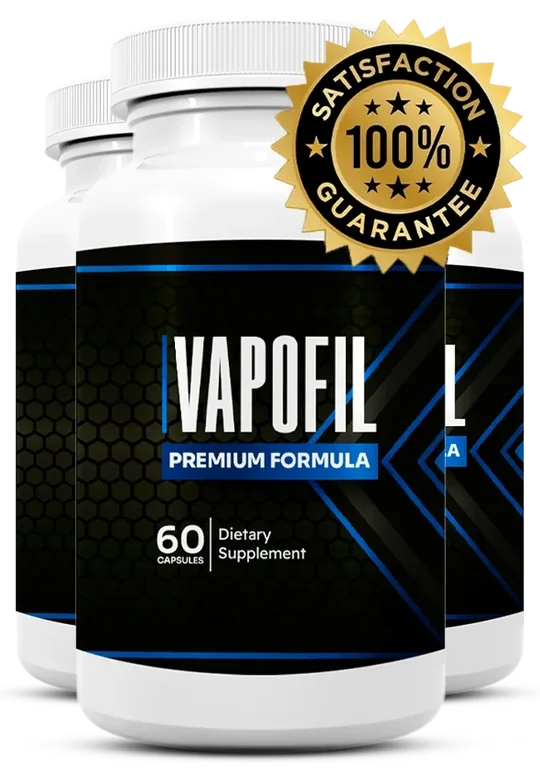
Vapofil Official Website › Male Vitality Supplement Guide
Male Vitality Supplement GuideThe Male Vitality Supplement Guide: How These Formulas Are Built
A male vitality formula is usually four to twelve botanical extracts in a capsule, sold on structure and function statements rather than on a clinical outcome. What separates a good one from a bad one is almost never the ingredient list, because they overlap heavily. It is whether the label prints an amount against each name, and whether those amounts are anywhere near the doses the published trials used.
How the category works, written so it is useful whichever bottle you end up with.
The ingredient list is the least useful thing on the label
Open six products in this aisle and you will see the same names. The Baylor group did exactly that with the six best-selling erectile-dysfunction supplements on a major marketplace and found 21 distinct ingredients between them, with ginseng, horny goat weed, L-arginine and tongkat ali appearing again and again. A larger Miami review covering 32 products found 37 ingredients and scored 68 per cent of them at C or D: contradictory, negative or absent evidence.
So a list of eight impressive plant names tells you almost nothing about which bottle to buy. Every bottle has one. What differs is the arithmetic, and the arithmetic is only visible when the label prints it.
Proprietary blends, and what they hide
A proprietary blend is one line on a Supplement Facts panel carrying a single total and a list of names underneath it. Eight names and 400 mg, say. It is legal, it is common, and it means nobody outside the company knows how much of any single ingredient is in the capsule.
The consequence is arithmetic rather than conspiracy. If the total is 400 mg and one of the eight names is an ingredient whose trials used 600 mg on its own, that ingredient cannot be at a trial dose, whatever else is true. A blend total is therefore a CEILING for every name under it at once, and reading it that way is the single most useful habit in this aisle.
A panel that prints an amount against every line gives up that cover. It is worth noticing when one does, because it lets you do the comparison the blend format prevents. The panel on this website is a worked example of the open kind.
Extract ratios, and the comparison they invite
The second thing to learn to read is a ratio. A label saying “10 mg, from 100:1 extract, equivalent to approximately 1000 mg of dry powder” is telling the truth: a hundred kilograms of raw material were concentrated into one, so ten milligrams of the concentrate came from about a gram of root.
The trap is what it invites you to compare against. Almost no clinical trial in this field uses raw powdered root. They use standardised extract, because that is what can be dosed reproducibly. The six-month tongkat ali trial used 200 mg a day of extract. So the honest comparison for a 10 mg extract line is against 200 mg of extract, not against a gram of root.
Neither number is a lie. One of them answers the question you are actually asking.
Find the trial dose, and check whether the trial used EXTRACT or RAW MATERIAL. If it used extract, compare the extract figures. If it used raw powder, the equivalence figure is the fair one. Nine times out of ten in this category it is extract.
Chelates and percentages, which change a number by twenty times
A mineral on a botanical panel is usually a chelate: the mineral bound to an amino acid to help absorption. The label prints the weight of the whole chelate and a percentage, and the percentage is the mineral.
So a line reading “Boron Amino Acid Chelate 5%, 20 mg” is one milligram of boron and nineteen milligrams of carrier. That distinction matters because the published work uses elemental figures: the depletion and repletion experiments supplemented 3 mg of boron a day, and the review of boron in human physiology discusses intakes in the same units. Comparing 20 mg of chelate against 3 mg of boron would make a product look six times better dosed than it is.
The same applies to magnesium glycinate, zinc picolinate and every other chelate you will meet. Read the percentage, do the multiplication, and compare like with like.
Plant parts: leaf, root, berry and bark are not interchangeable
This one catches careful readers. Nettle is the clearest example in the category. The prostate and urinary literature is for nettle ROOT: the comprehensive review names urticae radix in its own title, and the phase III combination trial used 120 mg of root extract per capsule. Nettle leaf is a different preparation with different chemistry, studied for different things.
A label printing nettle LEAF and a marketing page citing the nettle ROOT literature is not necessarily dishonest; it is often just careless. Either way the reader has to notice, because nobody else will. The same applies to saw palmetto berry against leaf, and to the several species sold as sarsaparilla.
The check is short: find the plant part on the panel, then find the plant part in the study. If they differ, the study is about a different substance.
What the seals describe, and what none of them describe
| Mark | What it actually says | What it does not say |
|---|---|---|
| GMP Certified | The factory documents and controls its process to a standard. | Nothing about what is in your bottle. |
| FDA Registered Facility | The agency knows the factory exists. | Not FDA approval. No supplement has that. |
| Made in the USA | Assembly happened in the US. | Nothing about where the plant material was grown, unless the label says so. |
| Non-GMO / Gluten Free / Dairy Free | A claim the seller is making about the ingredients. | A tested result, unless a certifying body is named. |
| Doctor Formulated | Almost always, nothing checkable. | Who the doctor is, unless a name and a registration appear. |
| Guaranteed Pure | A promise. | A laboratory result. Purity is measured, not asserted. |
The one mark that would describe the contents of your bottle is a certificate of analysis for your lot, and in this category it is almost never published.
That last line is the important one and it is why the channel matters. A review of laboratory findings catalogued 80 synthetic phosphodiesterase-5 inhibitors recovered from supplements sold in this category, none of which appeared on an ingredient list. A seal cannot protect against that. Buying from a manufacturer’s own checkout rather than an informal reseller is the part of the risk a buyer can actually control.
What the published evidence in this category actually covers
Three honest generalisations, each with a source behind it.
Most ingredients do not raise testosterone. A 2024 systematic review examined 52 studies covering 27 marketed ingredients and found most fail to do it. A handful were rated possibly effective in specific populations, tongkat ali among them, at the doses those trials used.
The best-run trials of the most-studied botanical were negative. CAMUS escalated saw palmetto to three times the standard dose over 72 weeks and matched placebo, and the current Cochrane review agrees for urinary symptoms.
The outcomes people buy these for respond to other things first. A meta-analysis of population research puts physical activity, alcohol, smoking and sleep at the front, and an umbrella review is the reason a sudden change is worth being examined for rather than supplemented.
Who publishes this Vapofil website?
- Kuchakulla M, Narasimman M, Soni Y, et al. A systematic review and evidence-based analysis of ingredients in popular male testosterone and erectile dysfunction supplements. Int J Impot Res. 2021;33(3):311-317. PMID 32358510. https://pubmed.ncbi.nlm.nih.gov/32358510/
- Balasubramanian A, Thirumavalavan N, Srivatsav A, et al. An Analysis of Popular Online Erectile Dysfunction Supplements. J Sex Med. 2019;16(6):843-852. PMID 31036522. https://pubmed.ncbi.nlm.nih.gov/31036522/
- Morgado A, Tsampoukas G, Sokolakis I, et al. Do "testosterone boosters" really increase serum total testosterone? A systematic review. Int J Impot Res. 2024;36(4):348-364. PMID 37697053. https://pubmed.ncbi.nlm.nih.gov/37697053/
- Kee CL, Ge X, Gilard V, Malet-Martino M, Low MY. A review of synthetic phosphodiesterase type 5 inhibitors (PDE-5i) found as adulterants in dietary supplements. J Pharm Biomed Anal. 2018;147:250-277. PMID 28903860. https://pubmed.ncbi.nlm.nih.gov/28903860/
- Barry MJ, Meleth S, Lee JY, et al. Effect of increasing doses of saw palmetto extract on lower urinary tract symptoms: a randomized trial. JAMA. 2011;306(12):1344-51. PMID 21954478. https://pubmed.ncbi.nlm.nih.gov/21954478/
- Franco JV, Trivisonno L, Sgarbossa NJ, et al. Serenoa repens for the treatment of lower urinary tract symptoms due to benign prostatic enlargement. Cochrane Database Syst Rev. 2023;6(6):CD001423. PMID 37345871. https://pubmed.ncbi.nlm.nih.gov/37345871/
- Chrubasik JE, Roufogalis BD, Wagner H, Chrubasik S. A comprehensive review on the stinging nettle effect and efficacy profiles. Part II: urticae radix. Phytomedicine. 2007;14(7-8):568-79. PMID 17509841. https://pubmed.ncbi.nlm.nih.gov/17509841/
- Lopatkin N, Sivkov A, Schlafke S, et al. Efficacy and safety of a combination of Sabal and Urtica extract in lower urinary tract symptoms -- long-term follow-up of a placebo-controlled, double-blind, multicenter trial. Int Urol Nephrol. 2007;39(4):1137-46. PMID 18038253. https://pubmed.ncbi.nlm.nih.gov/18038253/
- Nielsen FH. Biochemical and physiologic consequences of boron deprivation in humans. Environ Health Perspect. 1994;102 Suppl 7:59-63. PMID 7889883. https://pubmed.ncbi.nlm.nih.gov/7889883/
- Khaliq H, Juming Z, Ke-Mei P. The Physiological Role of Boron on Health. Biol Trace Elem Res. 2018;186(1):31-51. PMID 29546541. https://pubmed.ncbi.nlm.nih.gov/29546541/
- Leitao AE, Vieira MCS, Pelegrini A, et al. A 6-month, double-blind, placebo-controlled, randomized trial to evaluate the effect of Eurycoma longifolia (Tongkat Ali) and concurrent training on erectile function and testosterone levels in androgen deficiency of aging males (ADAM). Maturitas. 2021;145:78-85. PMID 33541567. https://pubmed.ncbi.nlm.nih.gov/33541567/
- Mostafaei H, Mori K, Hajebrahimi S, et al. Association of erectile dysfunction and cardiovascular disease: an umbrella review of systematic reviews and meta-analyses. BJU Int. 2021;128(1):3-11. PMID 33260254. https://pubmed.ncbi.nlm.nih.gov/33260254/
- Allen MS, Walter EE. Health-Related Lifestyle Factors and Sexual Dysfunction: A Meta-Analysis of Population-Based Research. J Sex Med. 2018;15(4):458-475. PMID 29523476. https://pubmed.ncbi.nlm.nih.gov/29523476/
- National Center for Complementary and Integrative Health. Dietary and Herbal Supplements. https://www.nccih.nih.gov/health/dietary-and-herbal-supplements
- National Center for Complementary and Integrative Health. Herbs at a Glance. https://www.nccih.nih.gov/health/herbsataglance
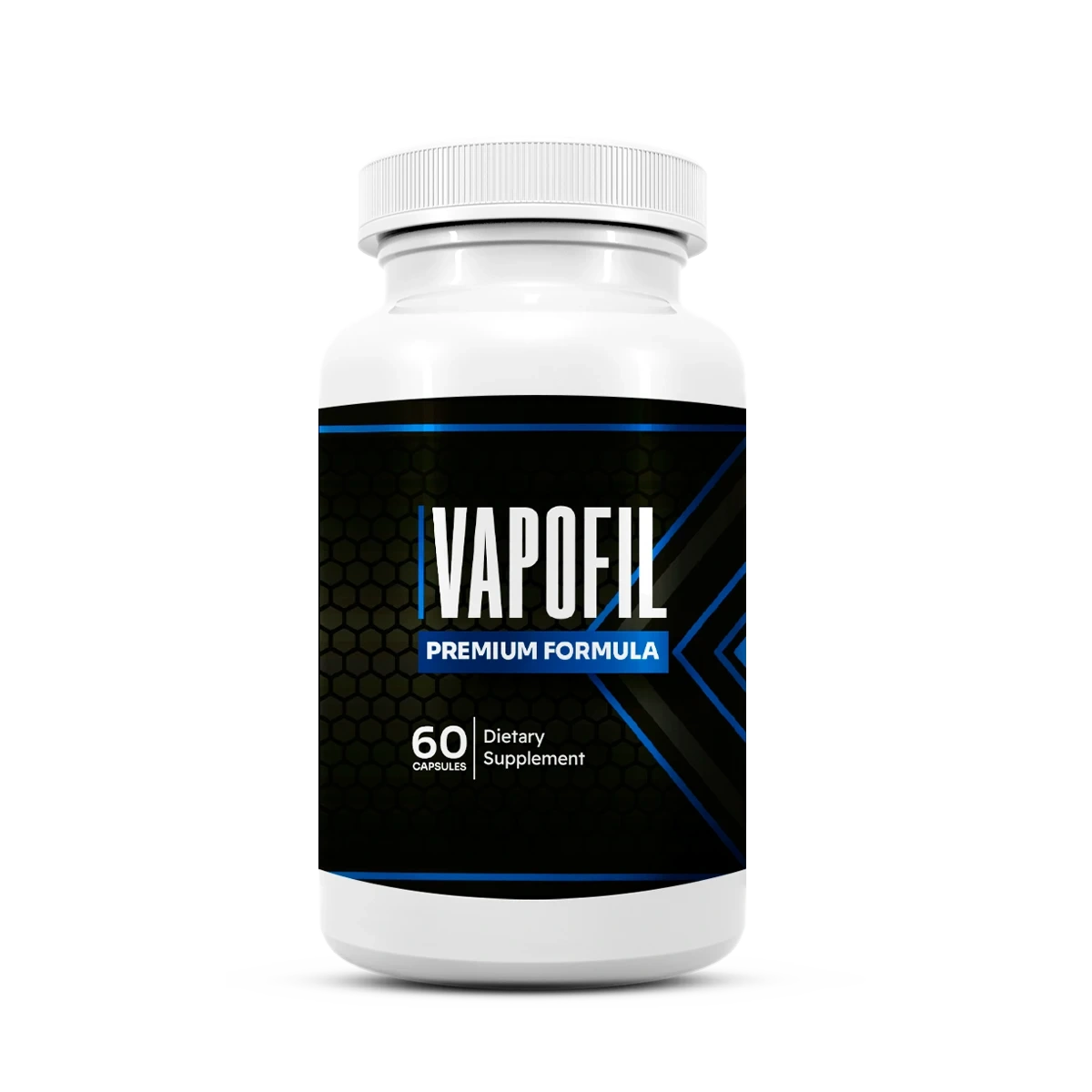
See how Vapofil reads against this guide
Seven names with printed amounts, an extract ratio explained both ways, a chelate converted to elemental boron and ten seals taken one at a time.
One bottle $89 · six bottles $294 · 60-day money-back guarantee
Order Vapofil On The Official WebsiteTwo capsules a day · 60 per bottle · lot VAP-26/GO-6809