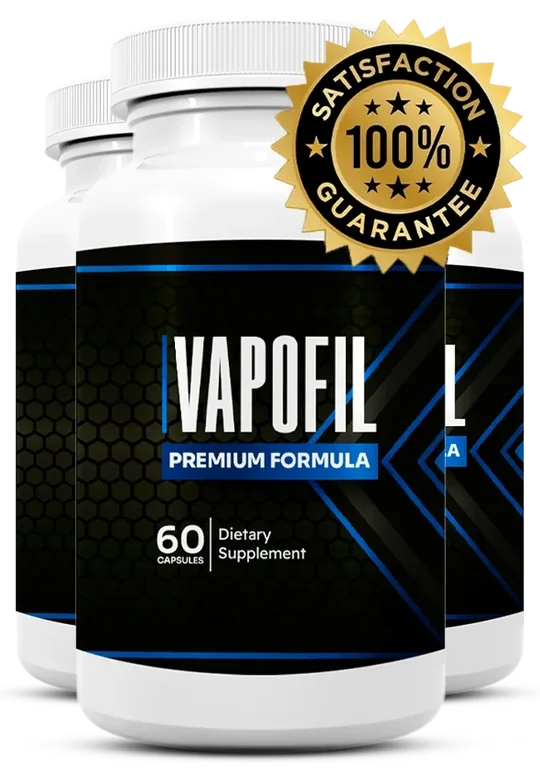
Vapofil Official Website › Blog › Ten Milligrams Of A 100:1 Extract
Ten Milligrams Of A 100:1 Extract: What That Line Actually Says
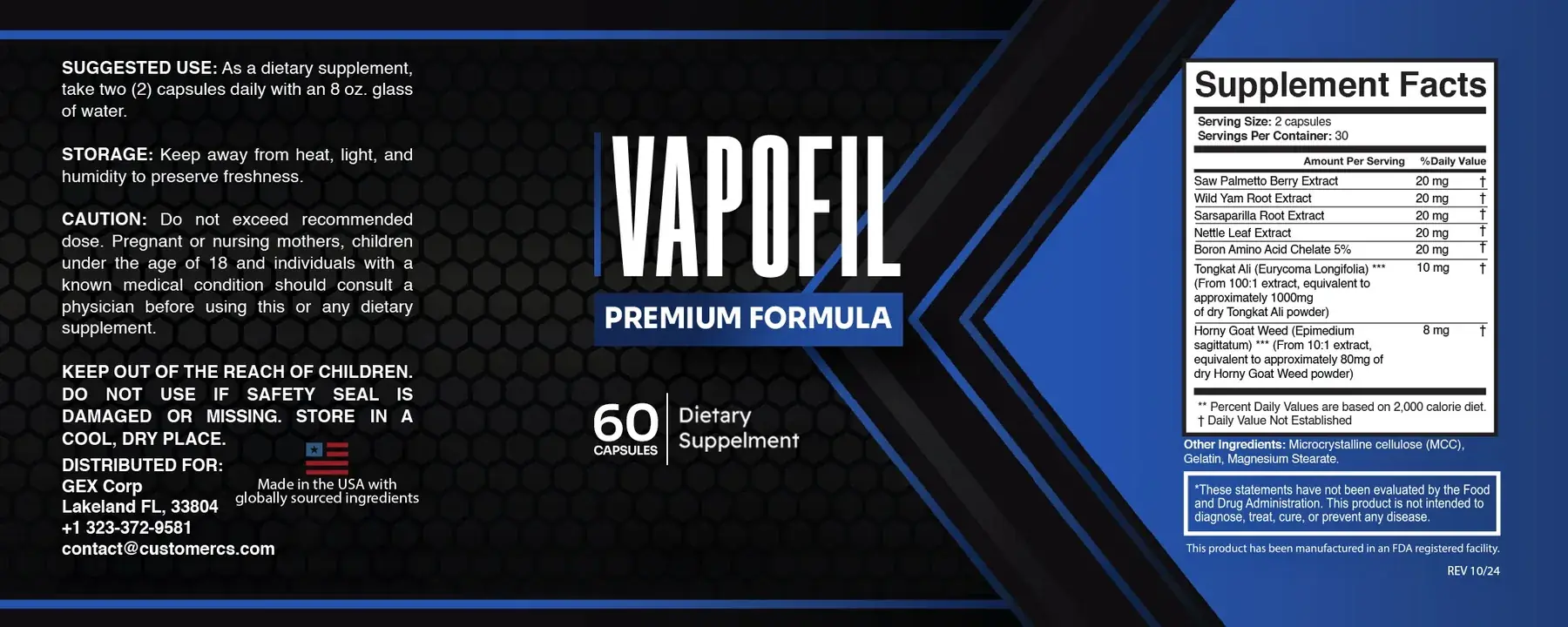
One line on this label does more work than any other, and it is the one most likely to be read the wrong way round. Ten milligrams, from a 100:1 extract, equivalent to approximately a thousand milligrams of dry root. All of that is true. Only one of those weights answers the question a buyer is asking.
- A 100:1 extract means a hundred units of raw plant produced one unit of concentrate.
- The printed 10 mg IS the amount in the capsule. It is not 1000 mg of anything.
- The trials that reported a result used standardised EXTRACT at 200 mg a day, not raw root, so the fair comparison is 10 against 200.
- The dry-powder equivalence is a real figure with nothing to compare it against, which is what makes it the flattering one to print.
What a ratio actually is
Botanical extraction takes plant material, pulls the soluble constituents out of it with water or alcohol, and drives off the solvent. What is left weighs a fraction of what went in, and the ratio is that fraction expressed as a comparison. A 100:1 extract means a hundred kilograms of root produced one kilogram of powder.
The ratio tells you about concentration and it tells you nothing about content. Two 100:1 extracts of the same plant, made by different processes, can carry different amounts of the compound anybody cares about, because the solvent decides what comes out. That is why clinical work uses standardised extracts, which specify a percentage of a marker compound rather than only a ratio.
So a ratio is a useful piece of manufacturing information and a weak piece of pharmacological information. It is worth printing and it is not worth much on its own.
| What the label line says | What it means |
|---|---|
| Tongkat Ali (Eurycoma Longifolia) | The plant and its botanical name |
| 10 mg | The weight of extract in a serving. This is the real number |
| From 100:1 extract | A hundred kilograms of root produced one kilogram of extract |
| Equivalent to approximately 1000mg of dry Tongkat Ali powder | What 10 mg of that concentrate started life as, before processing |
Every line of that is accurate. The question is which of the two weights is the one to compare against a published trial.
Two weights, one of which is useful
The panel line carries two numbers and they measure different things. Ten milligrams is the weight of concentrate in a serving of two capsules. A thousand milligrams is an estimate of the raw root that concentrate came from, before any of it was extracted or discarded.
Both are real. The question is which one you compare against a trial, and the answer depends entirely on what the trial gave its participants. If the trial gave raw powdered root, the equivalence figure is the fair comparator. If the trial gave extract, the extract figure is.
In this category it is almost always extract, for the reason above: raw root cannot be dosed reproducibly, because a batch grown in one place is not the same as a batch grown in another.
What the trials actually gave people
The six-month randomised trial is the clearest single study to read against this label. Forty-five men with androgen deficiency of the aging male were randomised into four arms crossing supplementation with concurrent training, and the supplemented arms received 200 mg a day of Eurycoma longifolia. Erectile function improved in both interventions and most in the arm doing both.
Two hundred milligrams a day of extract against ten here is a ratio of one to twenty. That is the comparison this website prints wherever tongkat ali comes up.
The 2022 meta-analysis widens the picture. It pooled five randomised trials and reported a significant increase in total testosterone, strongest in hypogonadal men, while concluding that more research is needed before clinical use. The doses in those trials run from 200 mg a day upward.
The 2015 meta-analysis of erectile function is the one that should temper any enthusiasm. It found only two eligible randomised trials, 139 participants between them, and no significant difference against placebo overall. A subgroup starting from the lowest baseline scores did show an improvement. That is a thin evidence base by any standard, and it is still the strongest on this panel.
| Comparison | This label | The published work | Ratio |
|---|---|---|---|
| Extract against extract | 10 mg a day | 200 mg a day for six months | 1 to 20 |
| Extract against the pooled trials | 10 mg a day | 200 to 400 mg a day across five randomised trials | 1 to 20, or 1 to 40 |
| Dry-powder equivalence against raw root | About 1000 mg | No trial used raw powdered root | No comparison available |
The third row is the comparison the label invites. It has nothing to compare against, which is exactly why it reads so well.
The limitation the trial states about itself
The six-month trial is worth reading for one more reason. Its own stated limitation is that there was no arm taking only the supplement, so it cannot separate the capsule from three sessions of concurrent training a week. The arm that improved most was doing both.
That is not a criticism of the study, which was designed to test a combination. It is a reason to be careful about how the result is quoted, because a product page citing it rarely mentions the training.
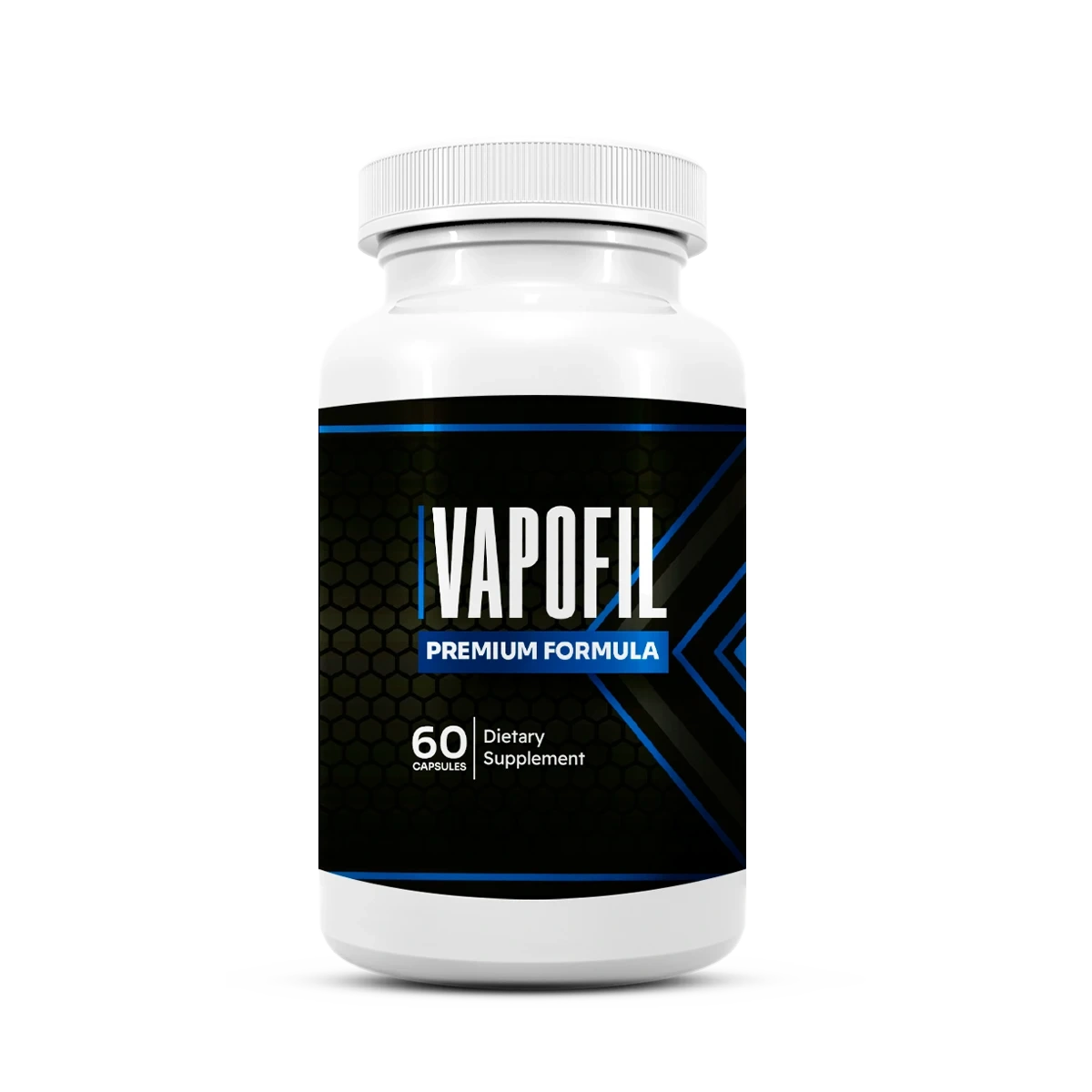
See the whole Vapofil panel, not one line of it
Seven actives, seven printed amounts, both extract footnotes explained in the same terms as this article, and the boron chelate converted to elemental weight.
One bottle $89 · six bottles $294 · 60-day money-back guarantee
Order Vapofil On The Official WebsiteTwo capsules a day · 60 per bottle · lot VAP-26/GO-6809
Why labels print the equivalence
Because it is the larger number and because it is true. There is no rule against printing both, and a manufacturer that has paid for a concentrated extract has a legitimate reason to say so: 10 mg of a 100:1 extract genuinely is a different thing from 10 mg of ground root.
The difficulty is what a reader does with it. A thousand milligrams sounds like a serious dose. Ten milligrams does not. Both describe the same capsule, and the one that gets remembered is the one printed in the same breath as the plant's name.
The Miami review of marketed ingredients is worth reading alongside this, because it scored 37 ingredients used across 32 popular products and put 68 per cent of them in the C or D bands for evidence. In a field with that much thin evidence in it, the presentation of a dose does a lot of the selling.
- A ratio is manufacturing information. It says how concentrated, not how much of what.
- An equivalence figure answers a question nobody is asking unless a trial used raw material.
- The printed milligram weight is the amount in the capsule, and it is the number to carry into any comparison.
- A standardised extract states a marker percentage as well as a ratio. This label states a ratio only.
The other ratio on this panel
Tongkat ali is not the only ratio line here. Horny goat weed is printed at 8 mg from a 10:1 extract, equivalent to approximately 80 mg of dry powder. The same reading applies: eight milligrams is what is in the capsule.
The difference is that there is nothing to compare either figure against. There is no human trial of icariin, the compound horny goat weed is standardised for, at any dose for this use. So the ratio here is not concealing an unflattering comparison; there is simply no comparison available, and this website says so rather than filling the gap with a mechanism.
That is a reasonable place to end up on a botanical panel, and it is more honest than the alternative of quoting a cell-culture result as though it were a dose.
How to read any ratio line in thirty seconds
- Find the printed milligram weight. That is the amount in the serving. Write it down.
- Note the ratio, but do not multiply by it. The equivalence figure on the label has already done that arithmetic and it is not the amount in the capsule.
- Find the trial the marketing cites and read its methods, not its abstract's conclusion.
- Ask what the trial gave: extract or raw material. In this category it is nearly always extract.
- Compare like with like. Extract against extract, or raw against raw. Never one of each.
The number in milligrams on the panel is the amount in the capsule, and the equivalence figure beside it is what that amount used to be before somebody boiled it down.
What this does not mean about the product
It does not mean the label is dishonest. Printing both figures is more information than a proprietary blend gives you, and every number on this panel can be checked, which is not true of most of the shelf.
It does not mean 10 mg does nothing. It means nobody has tested 10 mg, which is a different statement and a more accurate one. The 2024 systematic review of testosterone boosters rated tongkat ali as possibly effective for two of the four populations it examined, at the doses those trials used.
And it does not mean the ratio line is the most important thing about Vapofil. The most important thing about this label is that it prints an amount against every active at all. That is what makes this article possible, and it is what a proprietary blend exists to prevent.
References
- Leitao AE, Vieira MCS, Pelegrini A, et al. A 6-month, double-blind, placebo-controlled, randomized trial to evaluate the effect of Eurycoma longifolia (Tongkat Ali) and concurrent training on erectile function and testosterone levels in androgen deficiency of aging males (ADAM). Maturitas. 2021;145:78-85. PMID 33541567. https://pubmed.ncbi.nlm.nih.gov/33541567/
- Leisegang K, Finelli R, Sikka SC, Panner Selvam MK. Eurycoma longifolia (Jack) Improves Serum Total Testosterone in Men: A Systematic Review and Meta-Analysis of Clinical Trials. Medicina (Kaunas). 2022;58(8):1047. PMID 36013514. https://pubmed.ncbi.nlm.nih.gov/36013514/
- Kotirum S, Ismail SB, Chaiyakunapruk N. Efficacy of Tongkat Ali (Eurycoma longifolia) on erectile function improvement: systematic review and meta-analysis of randomized controlled trials. Complement Ther Med. 2015;23(5):693-8. PMID 26365449. https://pubmed.ncbi.nlm.nih.gov/26365449/
- Morgado A, Tsampoukas G, Sokolakis I, et al. Do "testosterone boosters" really increase serum total testosterone? A systematic review. Int J Impot Res. 2024;36(4):348-364. PMID 37697053. https://pubmed.ncbi.nlm.nih.gov/37697053/
- Kuchakulla M, Narasimman M, Soni Y, et al. A systematic review and evidence-based analysis of ingredients in popular male testosterone and erectile dysfunction supplements. Int J Impot Res. 2021;33(3):311-317. PMID 32358510. https://pubmed.ncbi.nlm.nih.gov/32358510/