Vapofil Official Website › Blog › Nettle Leaf Is Not Nettle Root
Nettle Leaf Is Not Nettle Root, And The Difference Is The Whole Literature
Every controlled trial behind nettle's reputation in men's health used the root. A great many labels print the leaf. They are different preparations of one plant with different chemistry and different research behind them, and almost nobody checks.
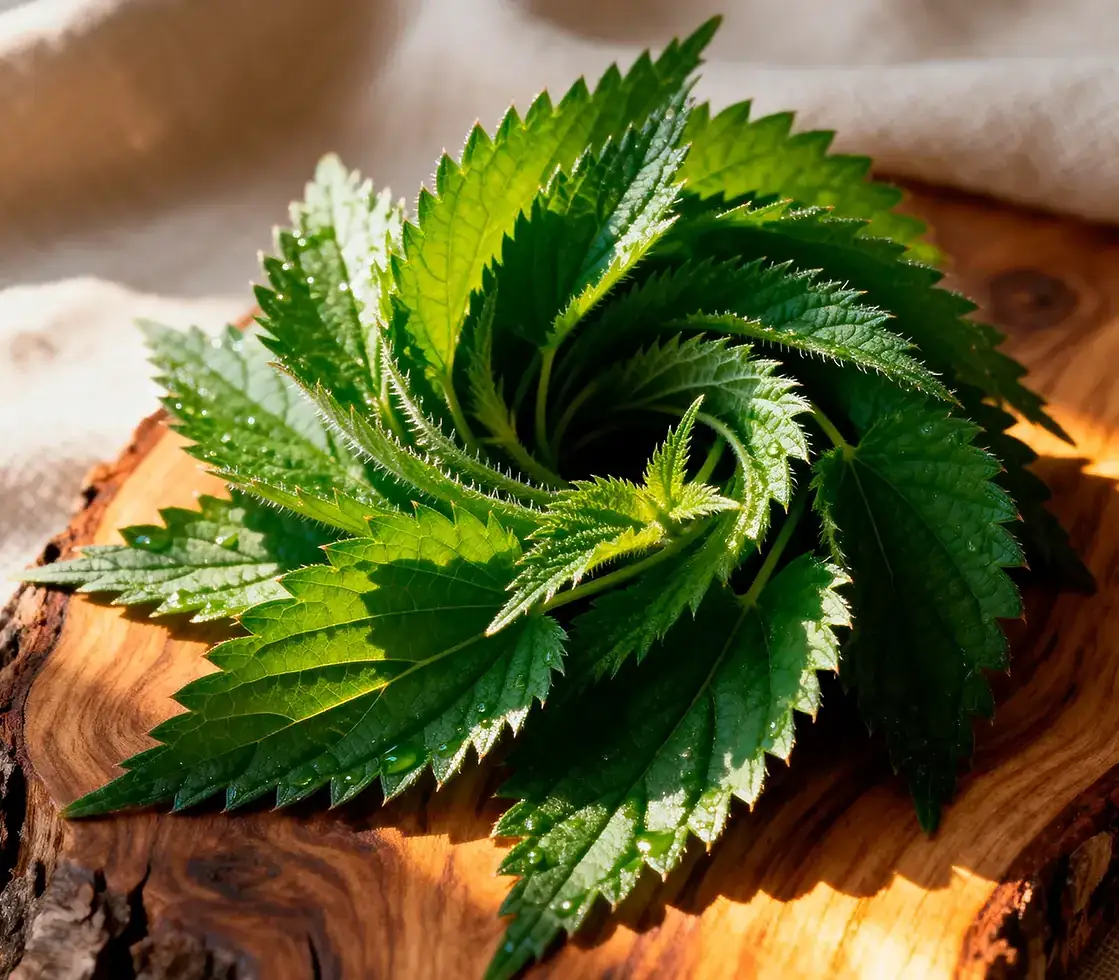
- Nettle root and nettle leaf are different preparations with different chemistry.
- The urinary and prostate research is for the ROOT. Its own comprehensive review names urticae radix in the title.
- The phase III trial that made this pairing famous used 120 mg of root extract per capsule, twice a day.
- A panel printing nettle LEAF is not citing that literature, whatever a marketing page says.
One plant, two medicines
Urtica dioica is a single species. What comes out of it depends entirely on which part you extract and with what. The root carries lignans, polysaccharides and sterols; the leaf carries a different profile with more of the flavonoids and the minerals people associate with nettle tea. Extract each with methanol and you get two powders that share a Latin name and very little else.
That is not unusual in botany. Dandelion root and dandelion leaf are used for different things. Ginger rhizome is not ginger leaf. What makes nettle worth writing about is that the two preparations sit on opposite sides of a body of clinical research, and supplement labels move between them without anybody noticing.
| Preparation | What it is | What the clinical literature covers |
|---|---|---|
| Nettle ROOT (urticae radix) | Extract of the underground parts | Lower urinary tract symptoms and benign prostatic hyperplasia. Several randomised trials, mostly of proprietary methanolic extracts |
| Nettle LEAF (urticae folium) | Extract of the aerial parts | A separate literature, largely about inflammation and allergic rhinitis, not about the prostate |
| Nettle seed | The seed | Almost nothing in controlled human work |
Three parts of one plant, three different chemistries, three different bodies of research. A label naming the part is telling you which one it means.
What the root research actually says
The comprehensive review of nettle root is explicit in its own title about what it covers: urticae radix. It sets out that only a few components of the active principle have been identified and that the mechanism is still unclear, with sex hormone binding globulin, aromatase, epidermal growth factor and prostate steroid membrane receptors as the candidates and 5-alpha-reductase considered less likely.
On the clinical side its conclusion is measured. The evidence for nettle root in benign prostatic hyperplasia rests largely on open studies; a small number of randomised controlled trials indicate that a proprietary methanolic extract is effective in improving symptoms, and the significance and magnitude of the effect remain to be established in further confirmatory studies before nettle root could be accepted into treatment guidelines.
That is a fair summary of a real but unfinished literature. Notice how much of it depends on the words PROPRIETARY METHANOLIC EXTRACT and ROOT. Neither of those survives translation to a line reading nettle leaf extract, 20 mg.
The combination trial, and its numbers
The most cited work in this area is not nettle alone. It is a fixed combination of saw palmetto and nettle root sold in Europe, and the long-term phase III trial of it is the study most product pages are reaching for when they mention the pairing.
The numbers are worth writing out. Each capsule contained 160 mg of sabal fruit extract and 120 mg of Urtica root extract. Patients took two capsules a day, which is 320 mg of saw palmetto and 240 mg of nettle root daily. Two hundred and fifty-seven men were randomised for 24 weeks, followed by a 24-week control period and a 48-week follow-up. Symptom scores fell by 53 per cent between baseline and week 96.
Set that beside a panel printing 20 mg of saw palmetto berry and 20 mg of nettle leaf and two differences appear at once. The amounts are a sixteenth and a twelfth. And one of the two plants is a different part.
| Trial | Preparation | Daily amount | What was measured |
|---|---|---|---|
| The phase III combination trial | Sabal fruit + Urtica ROOT extract | 320 mg saw palmetto and 240 mg nettle root, as two capsules | International Prostate Symptom Score over 96 weeks |
| CAMUS | Saw palmetto fruit extract only | 320, then 640, then 960 mg a day | AUA Symptom Index over 72 weeks |
| This panel | Saw palmetto berry + nettle LEAF | 20 mg and 20 mg | Not studied as a finished product |
The third row is not a trial. It is the label, placed in the same table so the difference in scale and in plant part is visible in one place.
What happened when saw palmetto was tested on its own
It is worth knowing that the saw palmetto half of that pairing did not hold up when isolated and tested at scale. CAMUS randomised 369 men and escalated them through 320, 640 and then 960 mg a day of saw palmetto extract over 72 weeks. Symptom scores improved in both arms and the difference favoured placebo by 0.79 points.
The current Cochrane review reaches the same conclusion. So the combination trial's result may belong to the nettle root, to the pairing, or to the length of the study, and the honest position is that nobody has separated them.
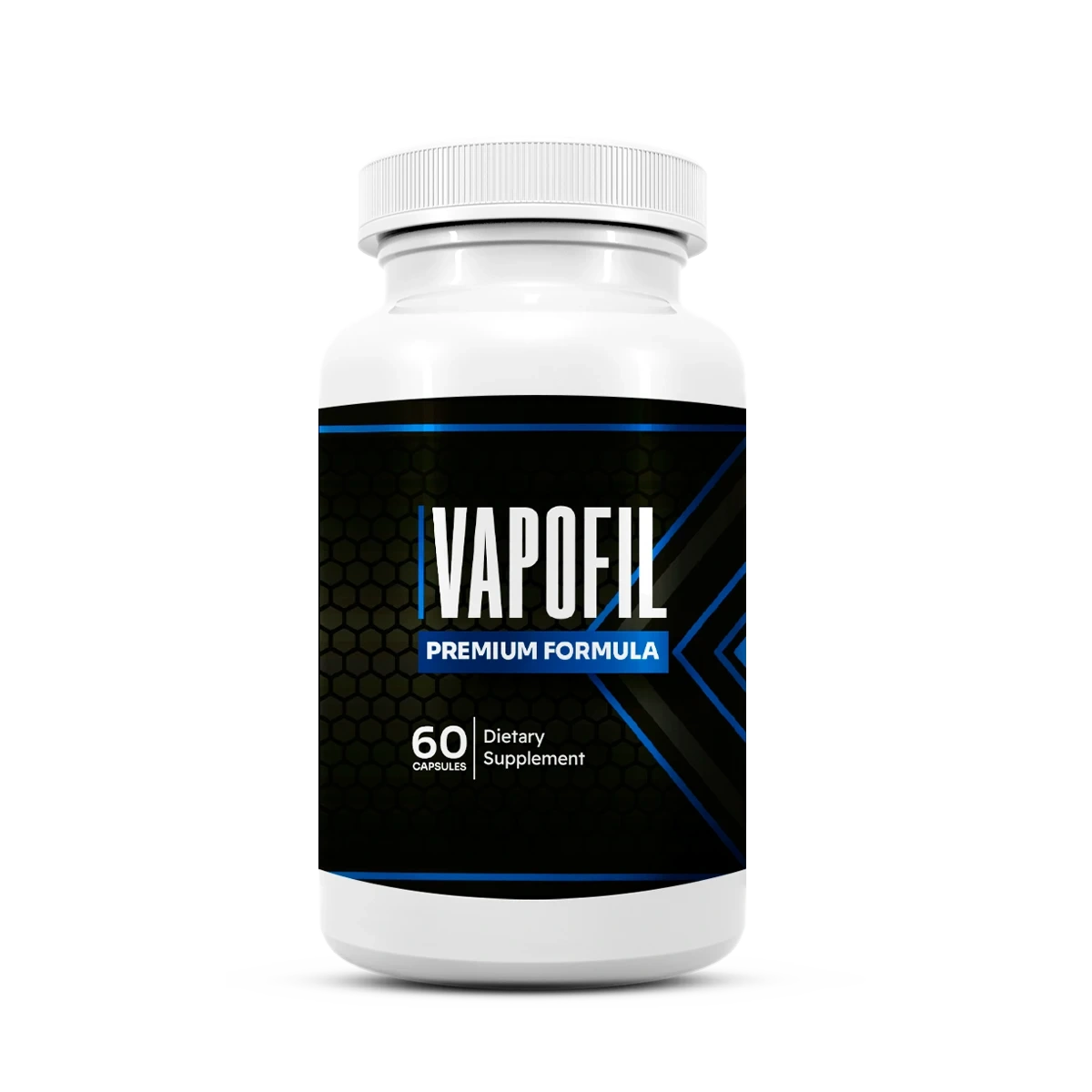
Read the Vapofil panel with the plant parts in front of you
Seven actives, each with its printed amount and its plant part, and the leaf-and-root distinction stated on the page rather than left for a reader to find.
One bottle $89 · six bottles $294 · 60-day money-back guarantee
Order Vapofil On The Official WebsiteTwo capsules a day · 60 per bottle · lot VAP-26/GO-6809
What the leaf is studied for
Nettle leaf is not an inert ingredient and it is not a mistake to put it in a formula. It has its own research, largely around inflammatory markers and allergic rhinitis, and a long history as a food and a tea. What it does not have is the prostate and urinary literature that gets cited when nettle appears on a men's formula.
So a panel printing nettle leaf is making a perfectly reasonable formulation choice and inheriting a reputation it did not earn. That distinction is the entire point of this article, and it is the sort of thing that only a reader can catch, because no regulation requires a marketing page to match its citation to its plant part.
- Root: lignans, sterols, polysaccharides. Studied for urinary symptoms.
- Leaf: flavonoids and minerals. Studied for inflammatory and allergic outcomes.
- The two are not interchangeable and a label that names the part is being more precise than one that does not.
- A label naming no part at all is the least informative of the three.
Why a label prints one and a page cites the other
Usually because nobody joined them up. A formulator chooses an ingredient from a supplier catalogue, a copywriter searches for research on nettle, and the two never meet. It is carelessness far more often than it is deception, and the effect on a reader is the same either way.
Cost plays a part too. Root extract is the more expensive preparation, because the root has to be dug rather than cut and there is less of it per plant. A formula working to a price will reach for the leaf.
The Miami review of marketed ingredients found that 68 per cent of the 37 ingredients it scored across 32 popular products fell into the C or D evidence bands. Plant-part drift is one of the quiet mechanisms by which an ingredient with genuinely mixed evidence ends up on a label sounding better established than it is.
The same problem elsewhere on a panel
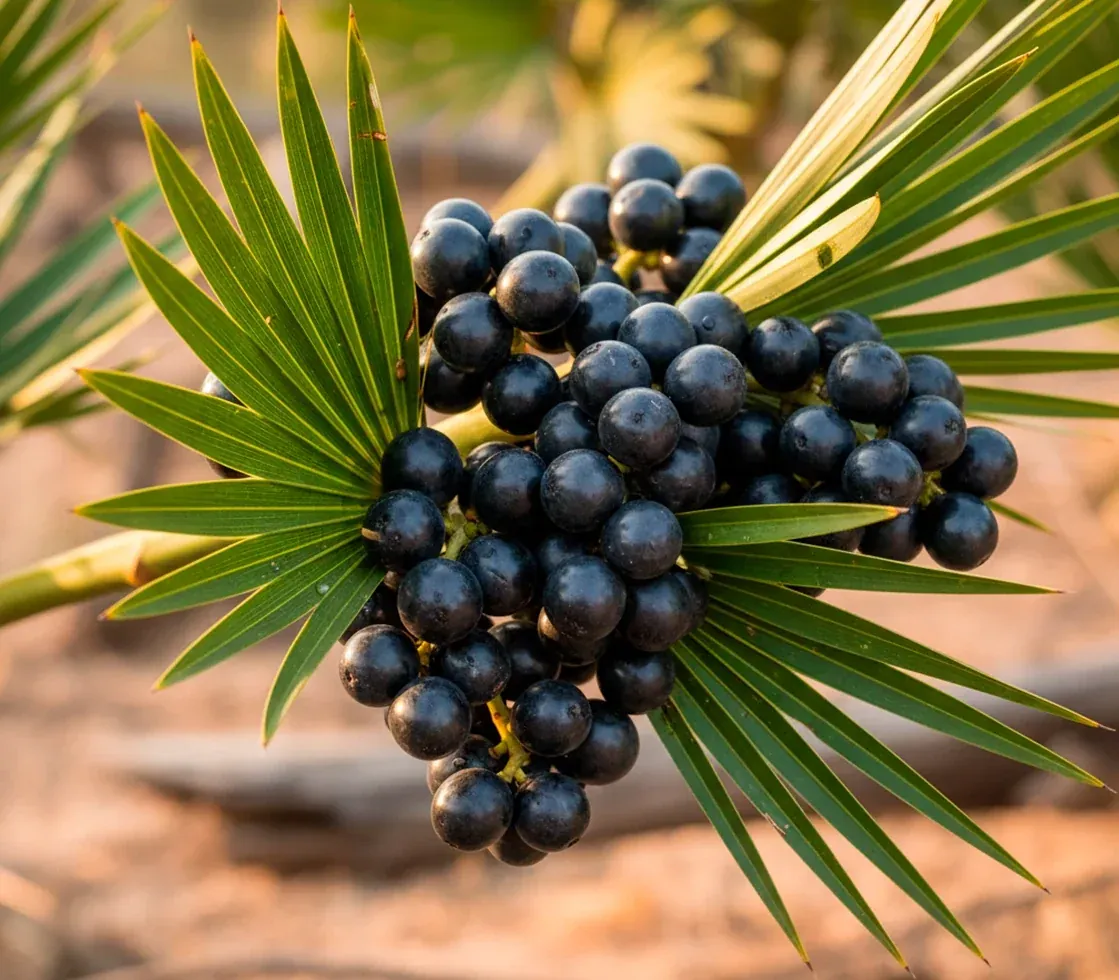
Once you start looking for it, it turns up repeatedly. Saw palmetto research is for the BERRY, and the berry is what this panel names, which is correct. Sarsaparilla is a whole genus rather than a species, and a panel naming no species is not telling you which plant you have. Wild yam is named as root, which matches the traditional use even though the only randomised human trial used a topical cream.
Three checks, one panel, about a minute of reading. It is the cheapest quality signal available to a buyer and it does not require trusting anybody.
Find the plant part on the panel. Open the study the marketing cites and read its methods section, not its conclusion. If the parts differ, the study is about a different substance and the citation is decoration.
How to check in one search
- Read the panel line and write down the plant part: root, leaf, berry, bark, seed.
- Find the study the marketing points at. If it points at nothing, that is its own answer.
- Open the abstract and read the methods sentence that names the preparation.
- Compare. Root against root, leaf against leaf.
- If the study used a proprietary standardised extract, note the name of it. That is usually the only preparation the result belongs to.
None of this requires a subscription or a laboratory. Every study cited on this website has its identifier printed beside it in the reference list, so the methods section is one click away. A page unwilling to give you the identifier is telling you something too.
References
- Chrubasik JE, Roufogalis BD, Wagner H, Chrubasik S. A comprehensive review on the stinging nettle effect and efficacy profiles. Part II: urticae radix. Phytomedicine. 2007;14(7-8):568-79. PMID 17509841. https://pubmed.ncbi.nlm.nih.gov/17509841/
- Lopatkin N, Sivkov A, Schlafke S, et al. Efficacy and safety of a combination of Sabal and Urtica extract in lower urinary tract symptoms -- long-term follow-up of a placebo-controlled, double-blind, multicenter trial. Int Urol Nephrol. 2007;39(4):1137-46. PMID 18038253. https://pubmed.ncbi.nlm.nih.gov/18038253/
- Barry MJ, Meleth S, Lee JY, et al. Effect of increasing doses of saw palmetto extract on lower urinary tract symptoms: a randomized trial. JAMA. 2011;306(12):1344-51. PMID 21954478. https://pubmed.ncbi.nlm.nih.gov/21954478/
- Franco JV, Trivisonno L, Sgarbossa NJ, et al. Serenoa repens for the treatment of lower urinary tract symptoms due to benign prostatic enlargement. Cochrane Database Syst Rev. 2023;6(6):CD001423. PMID 37345871. https://pubmed.ncbi.nlm.nih.gov/37345871/
- Kuchakulla M, Narasimman M, Soni Y, et al. A systematic review and evidence-based analysis of ingredients in popular male testosterone and erectile dysfunction supplements. Int J Impot Res. 2021;33(3):311-317. PMID 32358510. https://pubmed.ncbi.nlm.nih.gov/32358510/